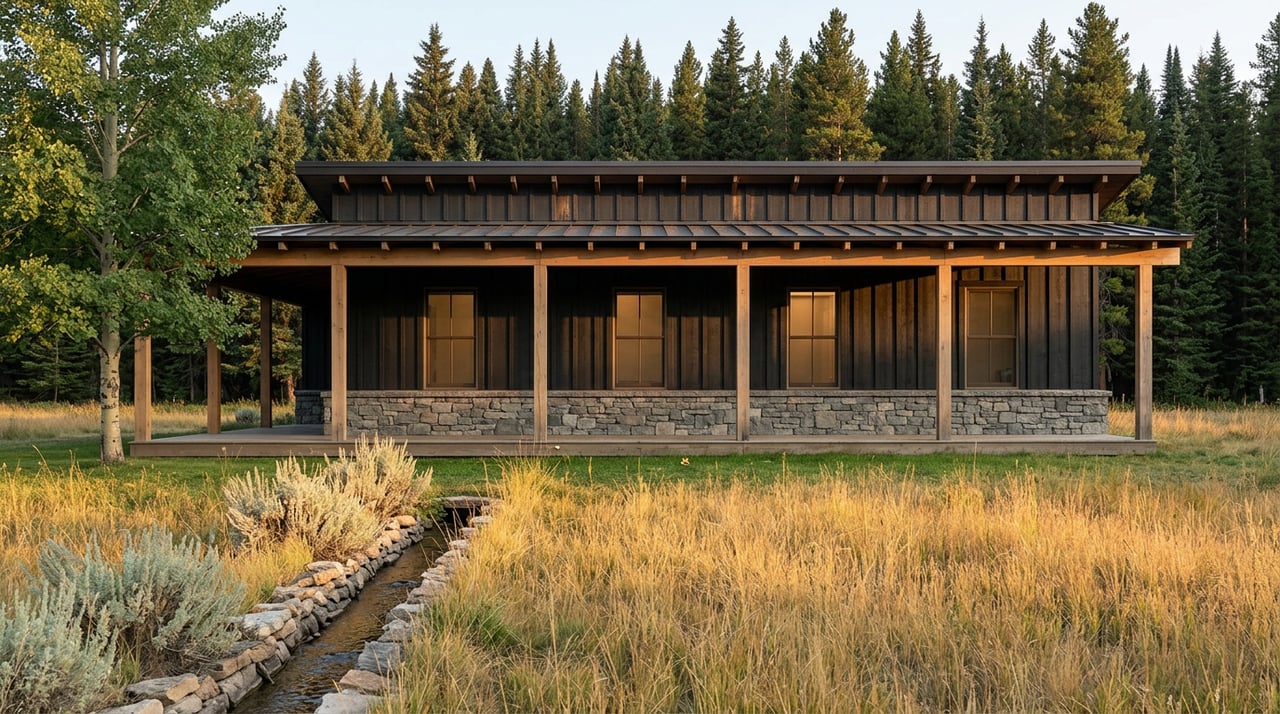
If you pulled up Hoback, Wyoming on a real estate portal this spring, you'd have seen a number that looks like trouble: a median sale price of $3,482,916 as of May 2026, down 39.9 percent from a year earlier. Read that cold and it sounds like a market in free fall.
Then, in late July, a very different kind of listing hit the market a few miles up the same river, as Cowboy State Daily reported. Hall and Hall broker Pete Widener listed the Hoback River Homestead, a 2,062-acre ranch south of Bondurant, for $59.5 million. It has never been sold in the 138 years since it was homesteaded. It has no mansion on it. What it has is roughly two miles of private Hoback River frontage, which Widener says is the largest privately held stretch of that river anywhere.
Months apart. Same river corridor. One number says the market is collapsing. The other says land here has never been worth more. Both are true, and understanding why is the actual lesson for anyone comparing Hoback to Jackson, Wilson, or anywhere else in the valley.
Fourteen Sales Can Move a County
Start with the county-level picture, because it explains the mechanism before we zoom into Hoback specifically. In February 2026, Redfin's data shows Teton County, Wyoming home prices down 53.8 percent from the year before, with a median sale price of $2.2 million. Homes were also taking far longer to sell, averaging 197 days on market compared to 58 days the year before.
Here's the detail that matters more than either of those percentages: only 14 homes sold in the entire county that month, up from 13 the year before. A county with roughly 2.5 million acres, nearly all of it federally managed public land according to reporting in Jackson Hole Magazine, closed fourteen transactions. When your total sample is that small, a single high-value closing or a single missing luxury sale can swing the median by double digits without any change in what property is actually worth.
Jackson itself, the largest and most liquid market in the valley, tells a calmer version of the same story. Over the three months ending May 2026, Redfin put Jackson's median sale price at $2.1 million, down 6.7 percent year over year, with homes selling in 84 days on average and 23 sales that May compared to 29 the year before. More transactions means less noise. Hoback, a fraction of Jackson's size, has almost none of that cushion.
| Market | Median Sale Price | Year-Over-Year Change | Days on Market |
|---|---|---|---|
| Hoback, WY | $3.48M (May 2026) | -39.9% | not reported |
| Jackson, WY | $2.1M (3 mo. ending May 2026) | -6.7% | 84 days |
| Teton County, WY overall | $2.2M (Feb 2026) | -53.8% | 197 days |
Read across that table and the pattern is clear. The smaller the market, the wilder the swing. Hoback's number isn't wrong. It's just built on so few closings that whichever properties happen to sell in a given stretch can tilt the whole figure.
The Ranch That Doesn't Fit the Curve
The Hoback River Homestead makes the point in the other direction. It's a rare offering in the river corridor.
What the ranch actually sells is scarcity that can't be manufactured. Widener has described elk visible on most of his site visits, from calving cows to bugling bulls, along with sage-grouse, sandhill cranes, and grizzly bears using the property and surrounding national forest. Fisherman's Creek, a second stretch of live water on the ranch, feeds irrigation that supports meadows grazing 45 to 100 head of livestock. The historic homestead cabins are still standing, some with spent cartridge casings hammered into the log walls where past occupants carved their initials. There's even an old windsock still flapping at a private airstrip nobody uses anymore.
None of that shows up in a price-per-square-foot calculation. It shows up in what a buyer is actually paying for: an intact, undivided stretch of river corridor that essentially cannot be recreated once it's gone.
As Jackson Hole Magazine reported, Jackson Hole Land Trust president Max Ludington explained the underlying logic of why land like this concentrates value:
"Homesteading was done where there is water."
Water drew the original settlers to these specific parcels, and it's exactly what wildlife still needs to move through a stretch of country that is otherwise almost entirely public land. The Hoback basin sits at the northern end of the Red Desert-to-Hoback mule deer migration, the longest documented ungulate migration route in the continental United States at roughly 150 miles. Every large, unbroken private parcel along that route, whether it eventually goes under a conservation easement or stays in private hands, is competing for a supply of land that isn't being made anymore.
Same Zip Code, Two Very Different Markets
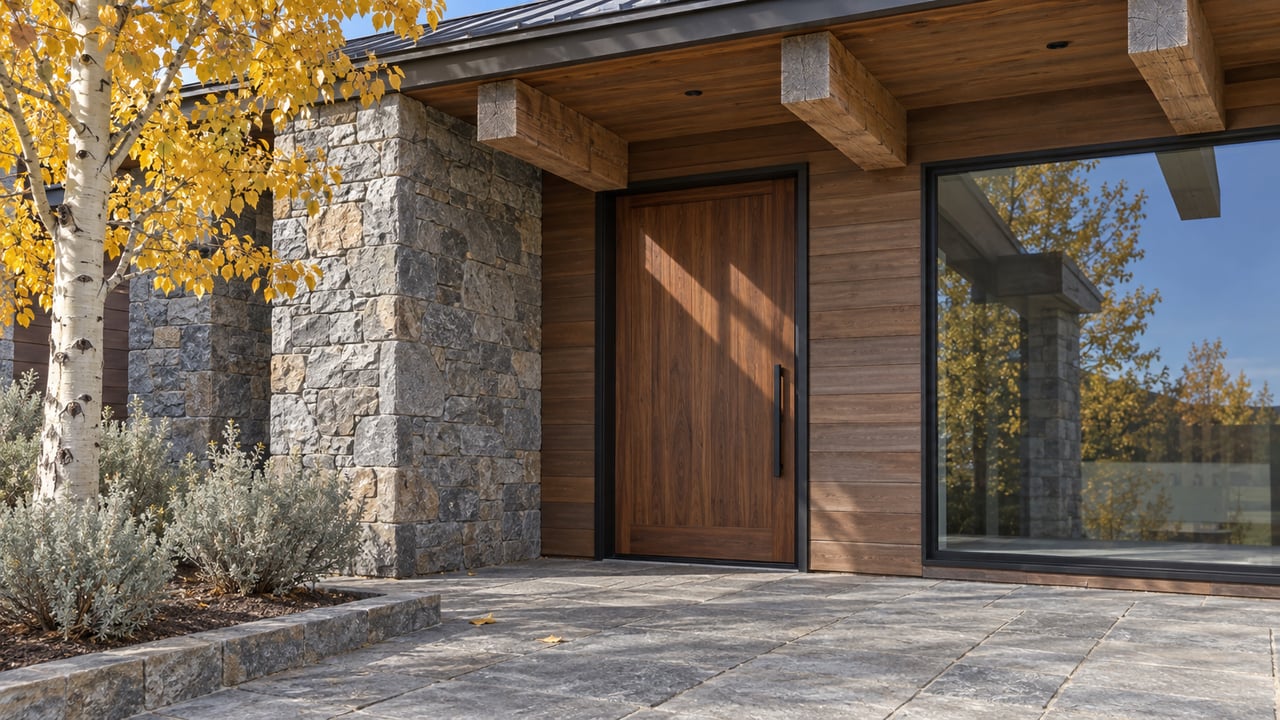
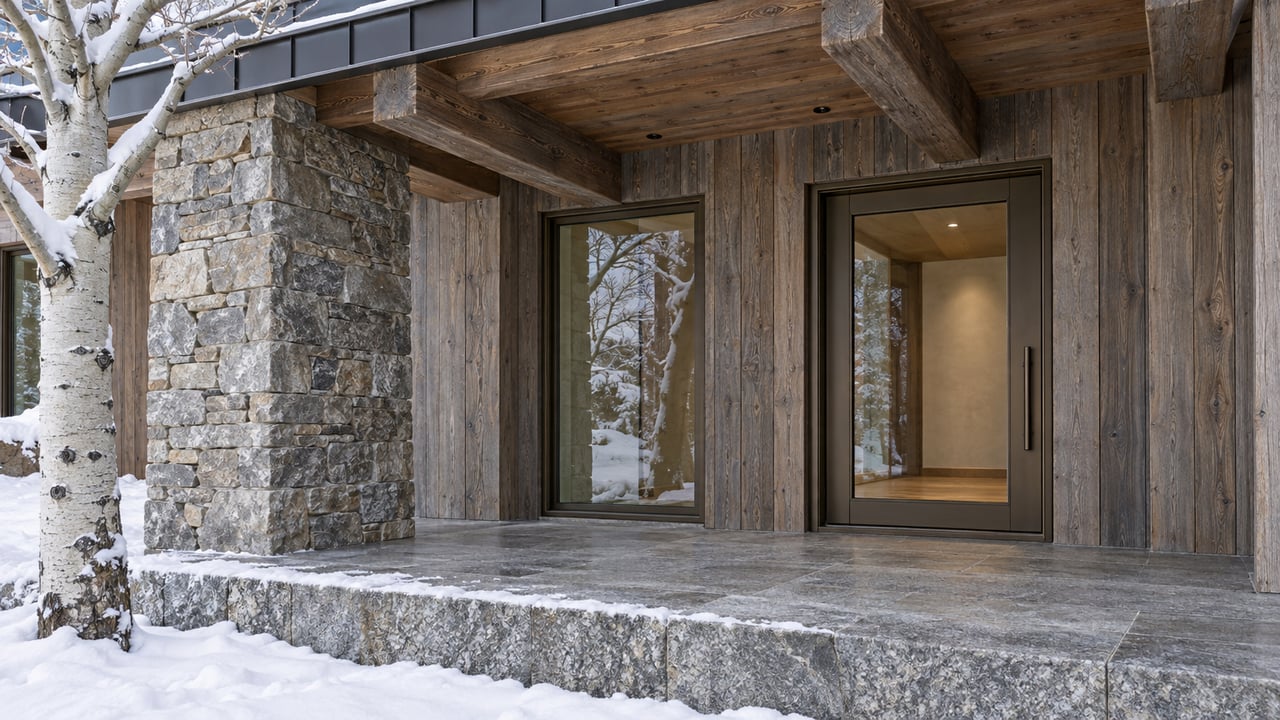
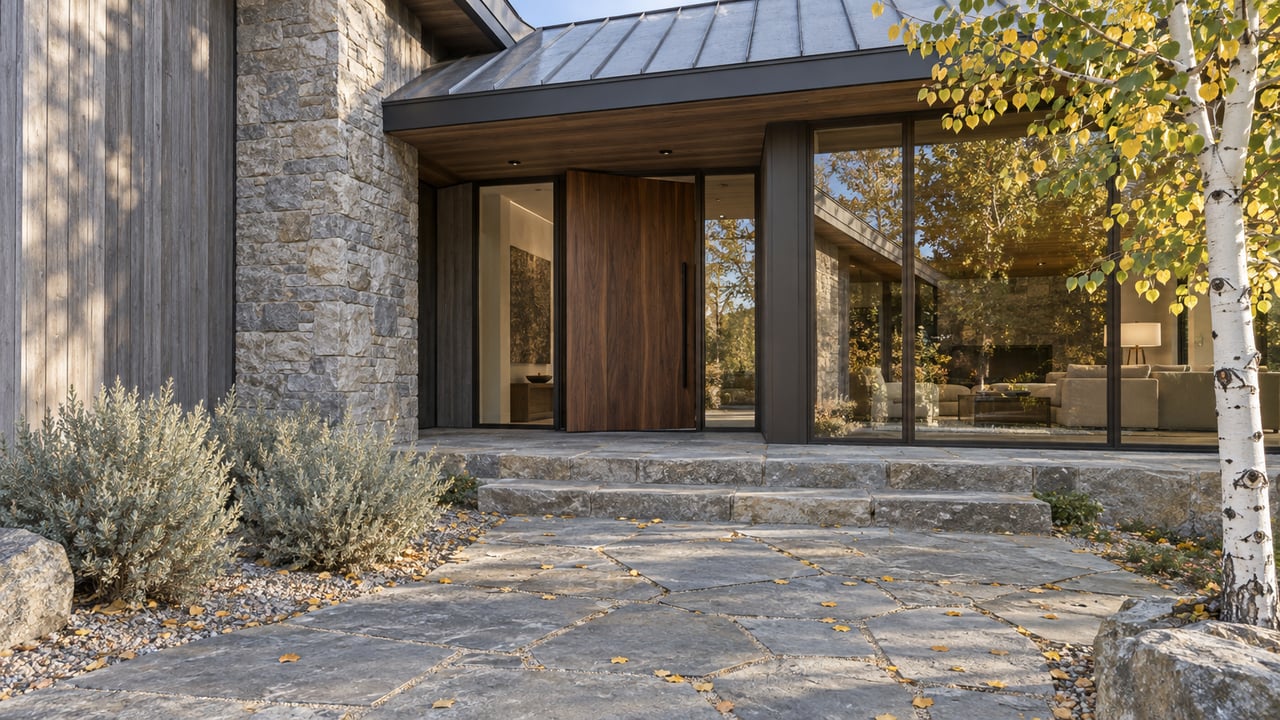
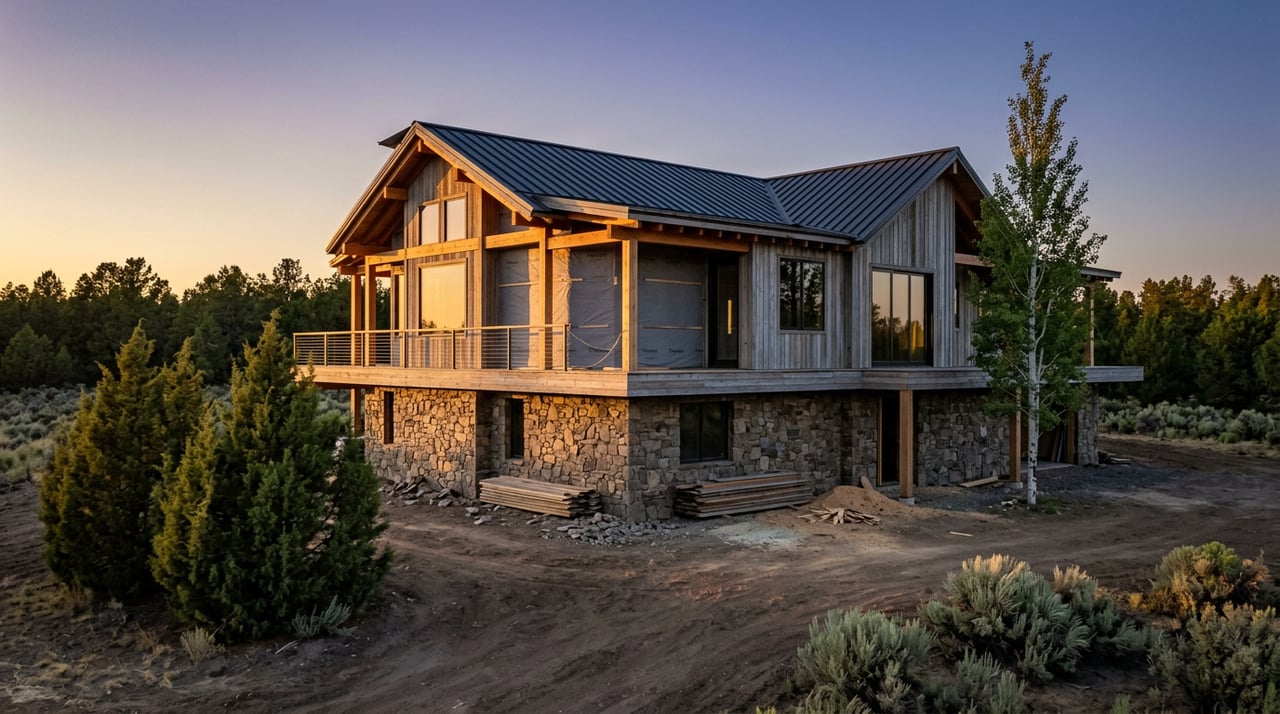
Zoom back down to the Hoback Junction area itself and you can watch the bifurcation play out inventory by inventory. In the same stretch of road, current listings have included a three-bedroom single-wide manufactured home on leased land in a mobile home community, sold as personal property rather than real estate, alongside architecturally significant custom residences set on several private acres with direct national forest access and views over the Snake and Hoback River confluence.
A few miles further into the canyon sits the Snake River Sporting Club, a roughly 1,000-acre private residential community about a half hour from Jackson's Town Square. Its 18-hole golf course, designed by Tom Weiskopf, converts to about 10 miles of groomed cross-country trails each winter. Ownership inside the club is split across three tiers, from large irrigated ranch estate parcels to custom residences to turnkey lodge cabins that come furnished and eligible for nightly rental. The club also runs its own on-site boutique hotel with a restaurant, spa, and rooftop hot tubs, giving lodge owners a built-in amenity base that a standalone river cabin outside the gates simply doesn't have.
The contrast between these listings shows how different Hoback properties can be. In a small market, the mix of properties that actually sell can make the median swing.
What This Means If You're Comparing Hoback to Jackson or Wilson
If you're cross-shopping Hoback against Jackson or Wilson using nothing but a headline median, you're comparing a thick, liquid market to a thin, lumpy one and expecting the numbers to mean the same thing. They don't.
The more useful approach is to sort what you're actually looking at into its own bucket before you compare anything. A raw land or ranch parcel along the river corridor prices on water frontage, acreage that's still intact rather than subdivided, and proximity to protected migration ground, not on a per-acre average pulled from unrelated sales. A home inside the Snake River Sporting Club prices on club membership, amenities, and rental flexibility, closer to a resort-adjacent purchase than a typical single-family comp. A standalone cabin along the Snake or Hoback outside the club gates prices more like a traditional residential purchase, though still against a very small pool of recent comps.
None of that means Hoback is overpriced or underpriced relative to Jackson. It means the single median number floating around on the portals right now isn't built to answer that question, and treating it as if it does will lead you to the wrong conclusion in either direction.
A Few Questions Worth Asking Before You Compare Numbers
Does a falling median mean now is a good time to buy in Hoback? Not necessarily. A falling median in a market this thin can mean prices are softening, or it can simply mean the mix of homes that closed recently skewed toward the lower end of the range. The number alone doesn't tell you which.
Why do so few homes sell in Hoback compared to Jackson? Hoback is a small unincorporated stretch of Teton County with a limited amount of private land to begin with, bordered on most sides by national forest and, further up the corridor, by ranches under conservation protection. There simply isn't a large inventory base to draw sales from in any given month.
What actually drives the value of land along the Hoback River corridor? Water frontage, the size of the intact parcel, and proximity to the Red Desert-to-Hoback migration corridor matter more than acreage alone. Land that can still be sold or developed as one unbroken piece, with meaningful river access, holds a different kind of value than land that's already been subdivided.
If you're weighing a purchase along the Hoback River corridor, whether that's a cabin near the confluence, a homesite inside Snake River Sporting Club, or a larger parcel further up the canyon, the comps that matter are rarely the ones sitting at the top of a portal search. Matthew Belford has spent nearly three decades working construction, remodels, and ownership logistics across Jackson Hole's south valley markets, and can help you read a specific property against the right set of comparisons rather than a countywide average. Let's Connect.