Why does a home in Alpine list for roughly a fifth of what a comparable Jackson home commands, when the drive between them is 36 miles of paved highway? The easy answer is "it's farther." The more useful answer is that Alpine is a different county, a different school district, a different planning regime, and, as of last October, a different zoning code than the one that shaped the town most current listings were built under.
Buyers comparing Alpine to Jackson on price alone are reading one variable in a five-variable equation. This post lays out the other four.
The canyon is the product, not the obstacle
US Route 89 northeast connects Alpine to Jackson Hole through the Snake River Canyon for a distance of 36 miles. The road follows the river the entire way, and because of that proximity, many who work in Jackson make their home in Alpine. That geographic fact does most of the work in the local market.
The canyon itself is not a back road. It is considered the fourth biggest attraction in Wyoming, with 150,000 to 200,000 visitors coming to run the river each summer, and camping in the corridor is limited to developed campgrounds only from May 1 through Labor Day. For a buyer, the practical read is that peak summer traffic through the canyon is not commuter traffic. It is raft-trailer traffic, and it lengthens the drive on precisely the days a second-home owner is most likely to be traveling.
That single fact reframes the Alpine value proposition. The town's discount to Jackson prices is the market's estimate of that canyon in June, July, and August. If your ownership use case is winter-heavy or shoulder-season, you are effectively buying a mispriced commute.
Two market reports, two Alpines
Here is where headline numbers get in a buyer's way. In early 2026, two national data sources described Alpine in ways that barely overlap.
- One reported that homes in Alpine sold for a median price of $1,000,000 in January 2026, with properties selling after 170 days on the market compared to 195 days the prior year, and 20 homes sold that month versus 15 the year before.
- Another reported that homes in Alpine sold after 55 days on the market on average, with a trailing twelve-month median sale price of $700,000, up 10% from the previous twelve months.
Both cannot be describing the same market in the same way. The gap is not a mistake so much as a definitional one: a rolling twelve-month median smooths out the sparse winter months, while a single-month snapshot in January captures a small, high-end mix. Alpine transacts in low enough volume that a handful of luxury closings around Alpine Airpark or Ridge Estates can double a monthly median on their own.
The interpretation matters. A buyer who anchors on the $1M January figure and expects Jackson-style bidding will misread the negotiation. A seller who anchors on the $700K trailing number and prices a well-finished home on acreage accordingly will leave money on the table. The composition of what is actually listed on any given week is doing more work than either headline.
The jurisdictional swap nobody prices in
Alpine is in Lincoln County. Jackson is in Teton County. The 36 miles of canyon between them cross a county line that carries real consequences for anyone who owns property on either side.
Teton County is where roughly 97% of the land is public and half of the remaining 3% sits in conservation easements, which is the structural reason Jackson prices behave the way they do. Lincoln County shares the same national forest neighborhood without the same land constraint. The Bridger-Teton National Forest offers more than 3.4 million acres of public land reachable from Alpine, and Palisades Reservoir provides 25 square miles of water with 70 miles of shoreline year-round. The recreation is comparable. The taxing authority, the county assessor, the school district, the road maintenance jurisdiction, and the local ordinance regime are not.
Sellers moving equity from Teton County into Alpine, and buyers arriving from out of state, both benefit from mapping this out with a local attorney and tax professional before writing an offer. The county boundary is where paperwork changes, not just prices.
The 2025 code change is already in play
Most Alpine listings marketed today were platted, built, or approved under a regulatory framework that no longer governs new development in the town center. The 2025 Land Use and Development Code encourages projects that mix live/work townhome units, commercial suites, and redevelopment near town center, aligning with the Mixed Residential Commercial (MRC) zone.
You can see the code working in real time. An October 2025 Planning and Zoning packet reviewed a project that required certified notices mailed to roughly 35 property owners within 500 feet, with about 18 owners holding multiple parcels. That is a small radius, a small notice list, and multiple-parcel owners inside it. It is a fair description of how consolidated ownership around the Highway 89/26 junction has become, and how quickly a single project can change the walk-shed of a resale.
For a buyer, the read is straightforward. Homes within a quarter mile of Alpine Junction are being priced against a future that includes higher-density mixed use around them. Homes farther out, in Alpine Meadows or up toward the Ridge Estates lots above Alpine Airpark, are not. Which of those you want depends on whether you are buying a mountain retreat or an appreciation play tied to town-center densification.
Inventory composition tells a truer story than median
Alpine is not one market. The active inventory typically splits across several distinct sub-segments that behave differently in a negotiation.
- Alpine Airpark parcels and homes. The private airstrip community sits above town, with hangar-adjacent lots and homes that trade on the aviation utility as much as on the acreage. Buyers here are not usually cross-shopping Jackson subdivisions.
- Ridge Estates and hillside lots. Mountain-top parcels above Alpine Airpark with sweeping views compete with West Bank Jackson view lots on scenery, and with Star Valley Ranch on price.
- Alpine Meadows. Homesites in Alpine Meadows with surrounding mountain and Palisades Reservoir views, backing up to walking paths and common area read as the closest thing Alpine has to a conventional subdivision comp set.
- Riverfront acreage on the Salt River. In 2026, a 27-plus-acre offering of exclusive riverfront lots on the Salt River in Alpine came to market. These are the trophy comparables that push monthly medians around.
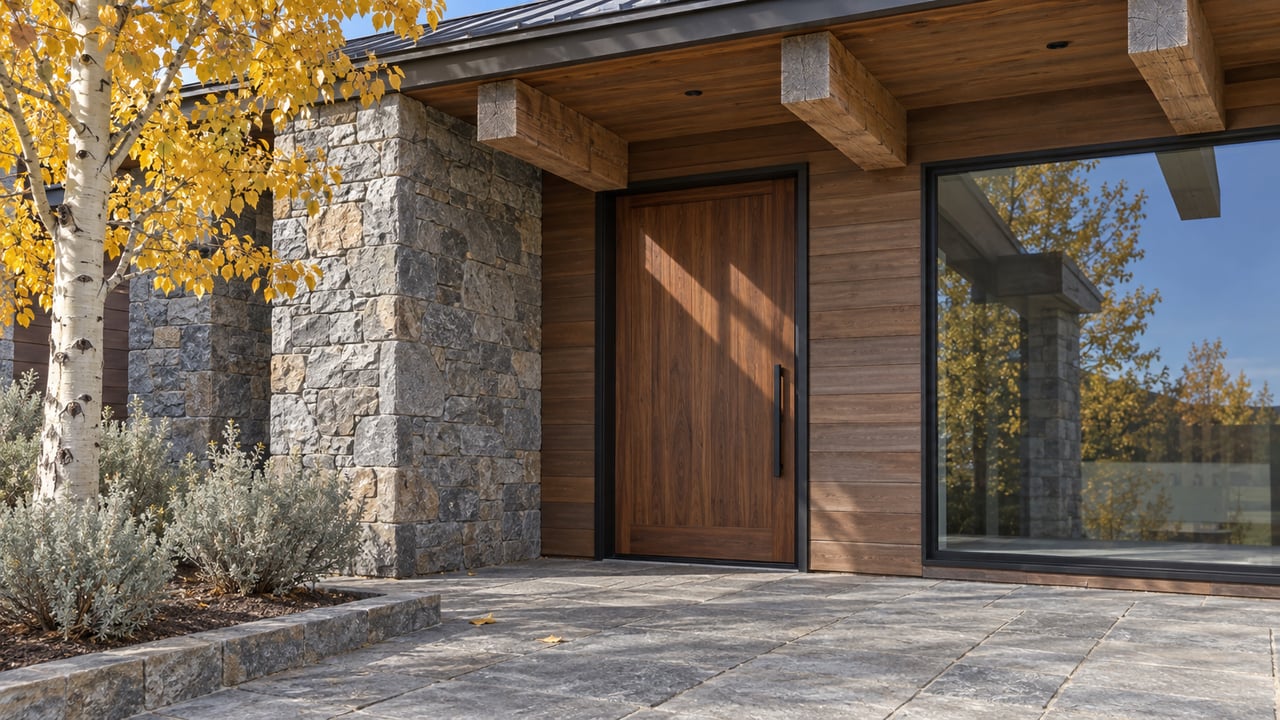
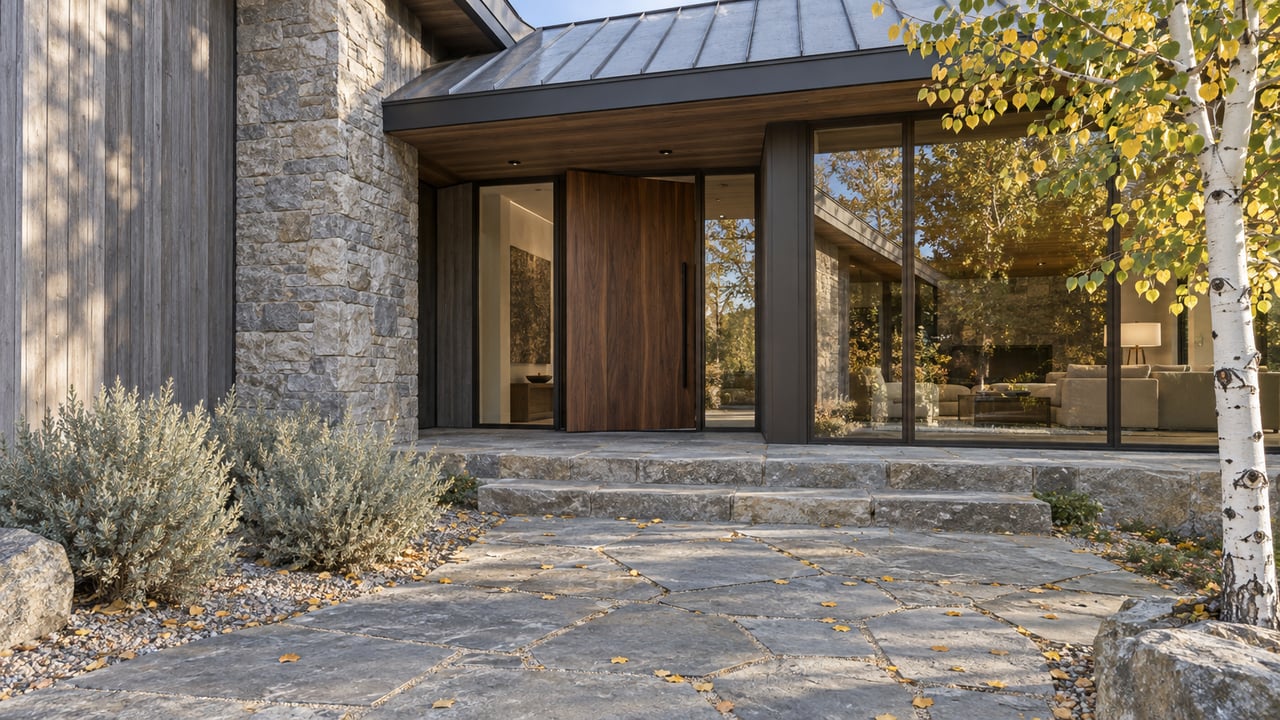
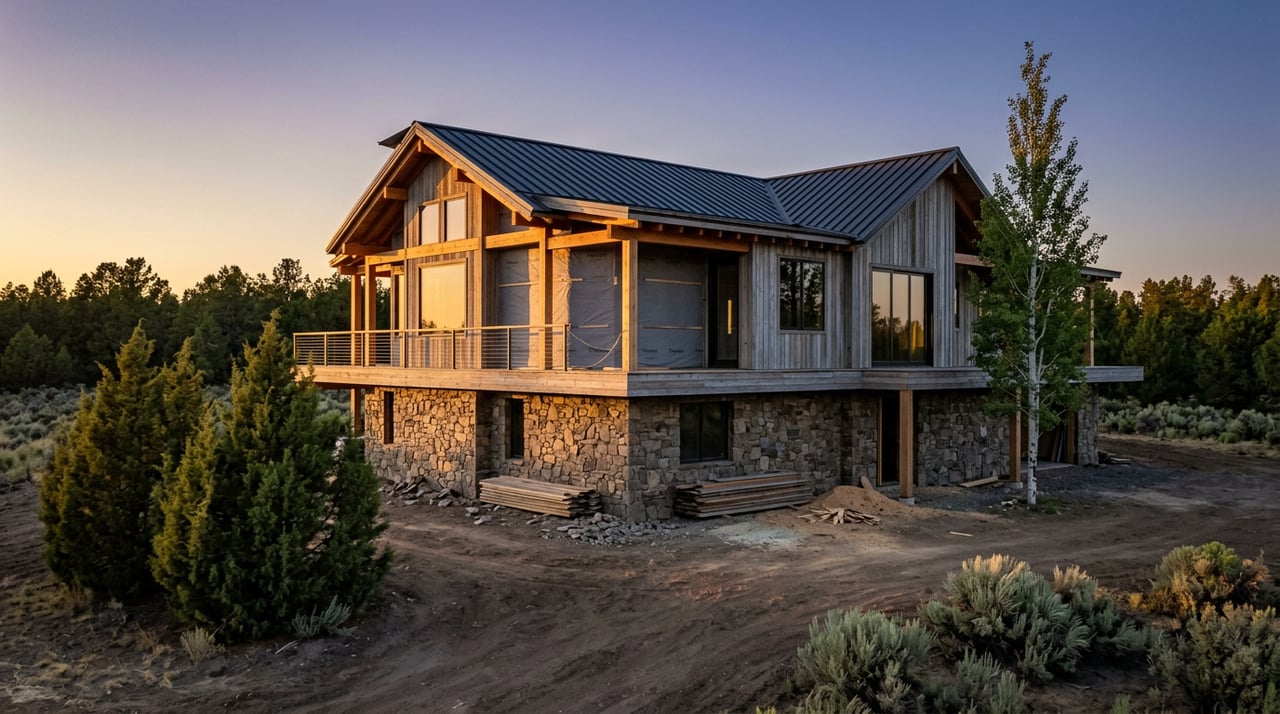
- New construction from small local builders. Star Valley Construction, a custom builder specializing in timber framing, log homes, and standard framing, works in Alpine, Thayne, Etna, and the surrounding towns, and North Ridge Homes has recent new-construction inventory with 1,475 square foot main-floor plans, open layouts, and vaulted ceilings. Spec homes from these builders often trade before they hit the wider market.
An Alpine offer written without knowing which sub-segment a listing belongs to is an offer priced against the wrong comparables.
Why the Jackson context still matters
The reason to keep one eye on the Teton County numbers, even when shopping in Alpine, is that Jackson's scarcity spills south. Jackson Hole's 2025 dollar volume surged 52% year over year, with 27% more closings than in 2024, for a total of 453 sales, and the average sales price was $4.79 million. A meaningful share of that volume came from a single project. A Teton Village development called the Hoback Club, held up for years in lawsuits, closed its units in 2025 and added roughly $250 million of real estate to the year's total.
That kind of concentrated closing activity in Teton County does two things to Alpine. It reprices the ceiling of what nearby markets can charge, and it pushes discretionary buyers who were priced out of the Jackson $1M–$3M range south through the canyon. Alpine listings under $1M see the direct effect. Listings above $2M see it indirectly, as buyers who would have shopped in Jackson widen their radius.
Quick FAQ
Is Alpine's market moving with Jackson or on its own timing? Both. Under $1M, Alpine tracks demand spillover from Teton County closely. Above $2M, Alpine has its own supply of riverfront and airpark inventory that trades on a slower, more idiosyncratic clock.
How should a buyer read a single monthly median in a low-volume market? Skeptically. In a town where 15 to 20 homes may close in a month, one or two high-end sales can distort the median by hundreds of thousands. Trailing twelve-month figures, cross-checked against the specific sub-segment you're shopping, are more useful.
What changes when a listing is inside the Mixed Residential Commercial zone? Adjacent parcels may be redeveloped as live/work townhomes or mixed-use buildings under the 2025 code, which affects walkability, density, and long-term view corridors around the town-center intersection.
Working the market
Alpine rewards buyers who read past the headline number and pay attention to which sub-segment they're actually in, which side of the county line they've just crossed, and what the 2025 code allows within a few hundred feet of any listing they like. When the canyon is short and the schedule is right, it is a very different kind of Jackson-area purchase than the median-price comparison implies.
If you're weighing an Alpine purchase against a Jackson one, or thinking about selling on either side of the canyon, Coldwell Banker Mountain Properties - Jackson Hole can help you read the composition of what's actually on the market, not just the summary statistics. Let's Connect.